 Add to Chrome
 Add to Firefox
 Add to Edge
Good Allocations from Bad Estimates
Jan 09, 2026
Conditional average treatment effect (CATE) estimation is the de facto gold standard for targeting a treatment to a heterogeneous population. The method estimates treatment effects up to an error $ε> 0$ in each of $M$ different strata of the population, targeting individuals in decreasing order of estimated treatment effect until the budget runs out. In general, this method requires $O(M/ε^2)$ samples. This is best possible if the goal is to estimate all treatment effects up to an $ε$ error. In this work, we show how to achieve the same total treatment effect as CATE with only $O(M/ε)$ samples for natural distributions of treatment effects. The key insight is that coarse estimates suffice for near-optimal treatment allocations. In addition, we show that budget flexibility can further reduce the sample complexity of allocation. Finally, we evaluate our algorithm on various real-world RCT datasets. In all cases, it finds nearly optimal treatment allocations with surprisingly few samples. Our work highlights the fundamental distinction between treatment effect estimation and treatment allocation: the latter requires far fewer samples.

Scaling Open-Ended Reasoning to Predict the Future
Dec 31, 2025High-stakes decision making involves reasoning under uncertainty about the future. In this work, we train language models to make predictions on open-ended forecasting questions. To scale up training data, we synthesize novel forecasting questions from global events reported in daily news, using a fully automated, careful curation recipe. We train the Qwen3 thinking models on our dataset, OpenForesight. To prevent leakage of future information during training and evaluation, we use an offline news corpus, both for data generation and retrieval in our forecasting system. Guided by a small validation set, we show the benefits of retrieval, and an improved reward function for reinforcement learning (RL). Once we obtain our final forecasting system, we perform held-out testing between May to August 2025. Our specialized model, OpenForecaster 8B, matches much larger proprietary models, with our training improving the accuracy, calibration, and consistency of predictions. We find calibration improvements from forecasting training generalize across popular benchmarks. We open-source all our models, code, and data to make research on language model forecasting broadly accessible.
Learning on the Job: Test-Time Curricula for Targeted Reinforcement Learning
Oct 06, 2025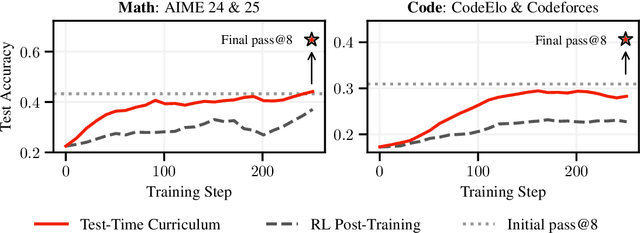
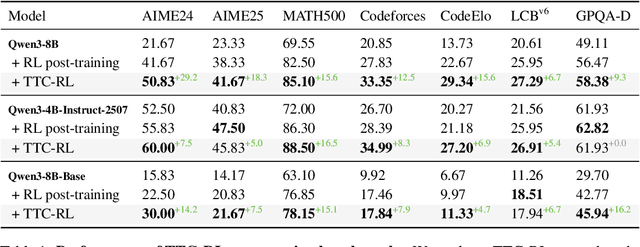
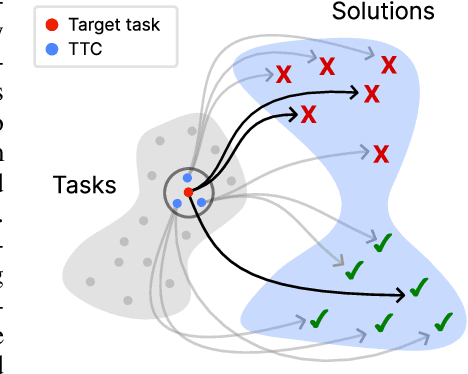
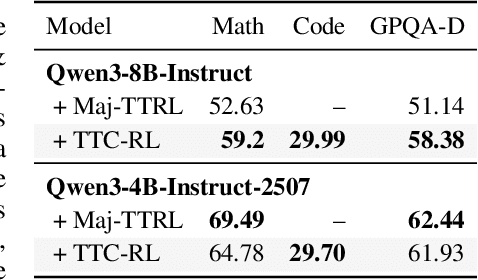
Humans are good at learning on the job: We learn how to solve the tasks we face as we go along. Can a model do the same? We propose an agent that assembles a task-specific curriculum, called test-time curriculum (TTC-RL), and applies reinforcement learning to continue training the model for its target task. The test-time curriculum avoids time-consuming human curation of datasets by automatically selecting the most task-relevant data from a large pool of available training data. Our experiments demonstrate that reinforcement learning on a test-time curriculum consistently improves the model on its target tasks, across a variety of evaluations and models. Notably, on challenging math and coding benchmarks, TTC-RL improves the pass@1 of Qwen3-8B by approximately 1.8x on AIME25 and 2.1x on CodeElo. Moreover, we find that TTC-RL significantly raises the performance ceiling compared to the initial model, increasing pass@8 on AIME25 from 40% to 62% and on CodeElo from 28% to 43%. Our findings show the potential of test-time curricula in extending the test-time scaling paradigm to continual training on thousands of task-relevant experiences during test-time.
Answer Matching Outperforms Multiple Choice for Language Model Evaluation
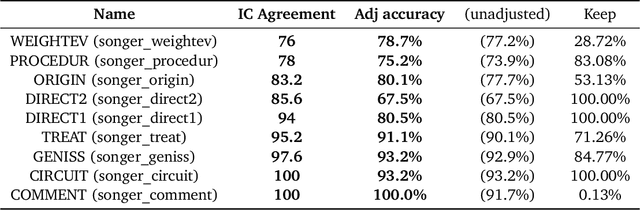
Jul 03, 2025Multiple choice benchmarks have long been the workhorse of language model evaluation because grading multiple choice is objective and easy to automate. However, we show multiple choice questions from popular benchmarks can often be answered without even seeing the question. These shortcuts arise from a fundamental limitation of discriminative evaluation not shared by evaluations of the model's free-form, generative answers. Until recently, there appeared to be no viable, scalable alternative to multiple choice--but, we show that this has changed. We consider generative evaluation via what we call answer matching: Give the candidate model the question without the options, have it generate a free-form response, then use a modern language model with the reference answer to determine if the response matches the reference. To compare the validity of different evaluation strategies, we annotate MMLU-Pro and GPQA-Diamond to obtain human grading data, and measure the agreement of each evaluation approach. We find answer matching using recent models--even small ones--achieves near-perfect agreement, in the range of inter-annotator agreement. In contrast, both multiple choice evaluation and using LLM-as-a-judge without reference answers aligns poorly with human grading. Improving evaluations via answer matching is not merely a conceptual concern: the rankings of several models change significantly when evaluating their free-form responses with answer matching. In light of these findings, we discuss how to move the evaluation ecosystem from multiple choice to answer matching.
How Benchmark Prediction from Fewer Data Misses the Mark
Jun 09, 2025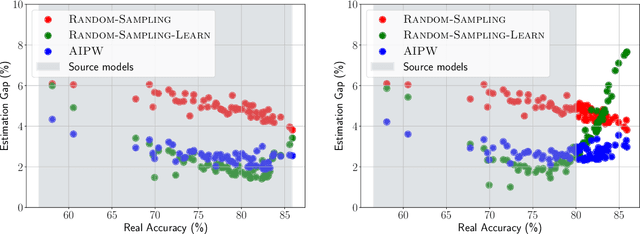
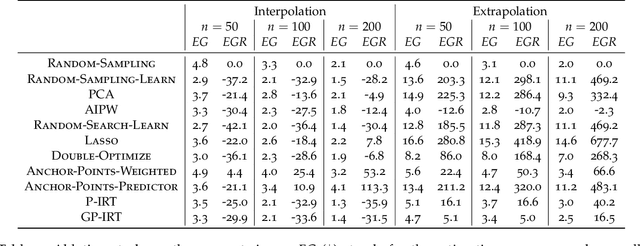
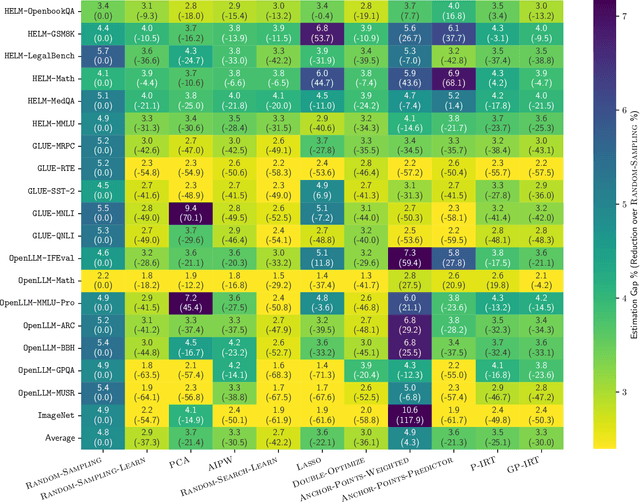
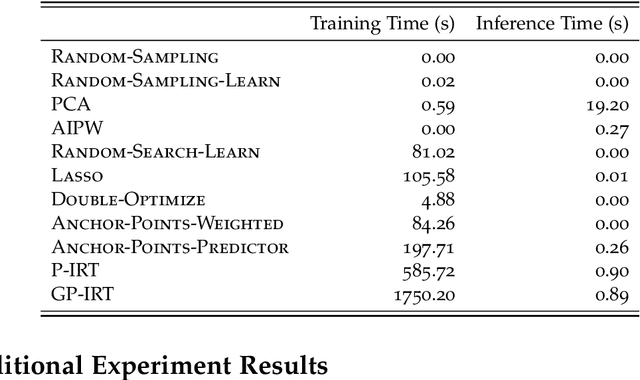
Large language model (LLM) evaluation is increasingly costly, prompting interest in methods that speed up evaluation by shrinking benchmark datasets. Benchmark prediction (also called efficient LLM evaluation) aims to select a small subset of evaluation points and predict overall benchmark performance from that subset. In this paper, we systematically assess the strengths and limitations of 11 benchmark prediction methods across 19 diverse benchmarks. First, we identify a highly competitive baseline: Take a random sample and fit a regression model on the sample to predict missing entries. Outperforming most existing methods, this baseline challenges the assumption that careful subset selection is necessary for benchmark prediction. Second, we discover that all existing methods crucially depend on model similarity. They work best when interpolating scores among similar models. The effectiveness of benchmark prediction sharply declines when new models have higher accuracy than previously seen models. In this setting of extrapolation, none of the previous methods consistently beat a simple average over random samples. To improve over the sample average, we introduce a new method inspired by augmented inverse propensity weighting. This method consistently outperforms the random sample average even for extrapolation. However, its performance still relies on model similarity and the gains are modest in general. This shows that benchmark prediction fails just when it is most needed: at the evaluation frontier, where the goal is to evaluate new models of unknown capabilities.
Limits to scalable evaluation at the frontier: LLM as Judge won't beat twice the data
Oct 17, 2024
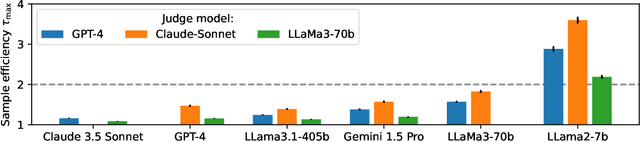
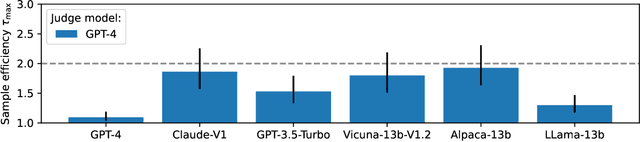
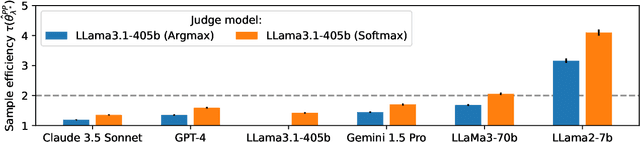
High quality annotations are increasingly a bottleneck in the explosively growing machine learning ecosystem. Scalable evaluation methods that avoid costly annotation have therefore become an important research ambition. Many hope to use strong existing models in lieu of costly labels to provide cheap model evaluations. Unfortunately, this method of using models as judges introduces biases, such as self-preferencing, that can distort model comparisons. An emerging family of debiasing tools promises to fix these issues by using a few high quality labels to debias a large number of model judgments. In this paper, we study how far such debiasing methods, in principle, can go. Our main result shows that when the judge is no more accurate than the evaluated model, no debiasing method can decrease the required amount of ground truth labels by more than half. Our result speaks to the severe limitations of the LLM-as-a-judge paradigm at the evaluation frontier where the goal is to assess newly released models that are possibly better than the judge. Through an empirical evaluation, we demonstrate that the sample size savings achievable in practice are even more modest than what our theoretical limit suggests. Along the way, our work provides new observations about debiasing methods for model evaluation, and points out promising avenues for future work.
Lawma: The Power of Specialization for Legal Tasks
Jul 23, 2024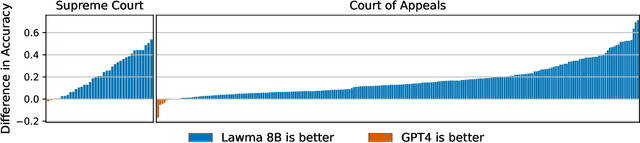
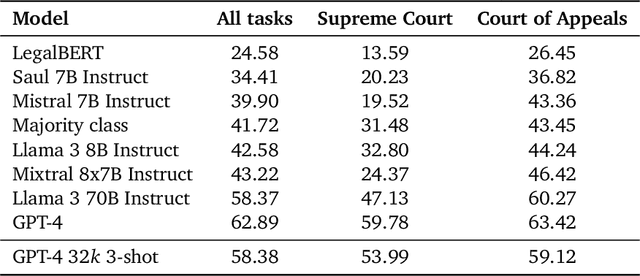

Annotation and classification of legal text are central components of empirical legal research. Traditionally, these tasks are often delegated to trained research assistants. Motivated by the advances in language modeling, empirical legal scholars are increasingly turning to prompting commercial models, hoping that it will alleviate the significant cost of human annotation. Despite growing use, our understanding of how to best utilize large language models for legal tasks remains limited. We conduct a comprehensive study of 260 legal text classification tasks, nearly all new to the machine learning community. Starting from GPT-4 as a baseline, we show that it has non-trivial but highly varied zero-shot accuracy, often exhibiting performance that may be insufficient for legal work. We then demonstrate that a lightly fine-tuned Llama 3 model vastly outperforms GPT-4 on almost all tasks, typically by double-digit percentage points. We find that larger models respond better to fine-tuning than smaller models. A few tens to hundreds of examples suffice to achieve high classification accuracy. Notably, we can fine-tune a single model on all 260 tasks simultaneously at a small loss in accuracy relative to having a separate model for each task. Our work points to a viable alternative to the predominant practice of prompting commercial models. For concrete legal tasks with some available labeled data, researchers are better off using a fine-tuned open-source model.
Evaluating language models as risk scores
Jul 19, 2024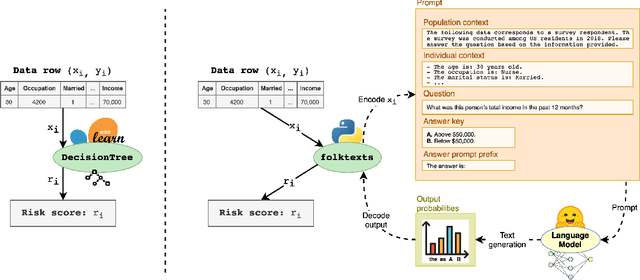
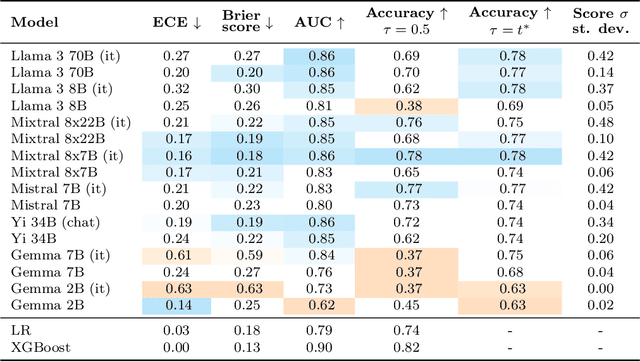
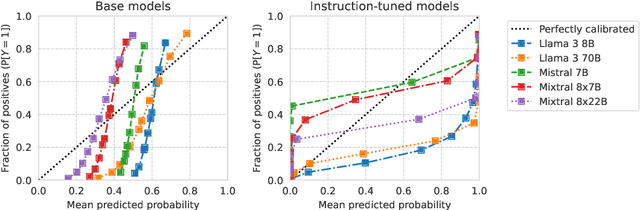
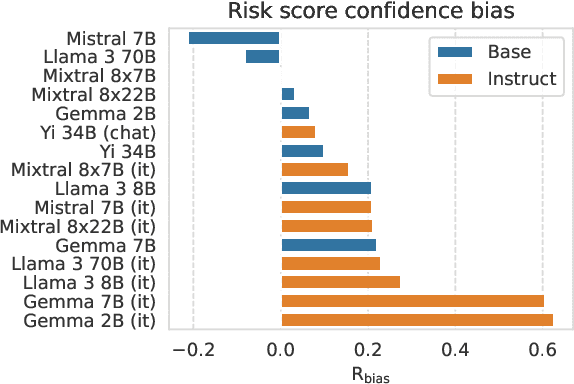
Current question-answering benchmarks predominantly focus on accuracy in realizable prediction tasks. Conditioned on a question and answer-key, does the most likely token match the ground truth? Such benchmarks necessarily fail to evaluate language models' ability to quantify outcome uncertainty. In this work, we focus on the use of language models as risk scores for unrealizable prediction tasks. We introduce folktexts, a software package to systematically generate risk scores using large language models, and evaluate them against benchmark prediction tasks. Specifically, the package derives natural language tasks from US Census data products, inspired by popular tabular data benchmarks. A flexible API allows for any task to be constructed out of 28 census features whose values are mapped to prompt-completion pairs. We demonstrate the utility of folktexts through a sweep of empirical insights on 16 recent large language models, inspecting risk scores, calibration curves, and diverse evaluation metrics. We find that zero-shot risk sores have high predictive signal while being widely miscalibrated: base models overestimate outcome uncertainty, while instruction-tuned models underestimate uncertainty and generate over-confident risk scores.
Training on the Test Task Confounds Evaluation and Emergence
Jul 10, 2024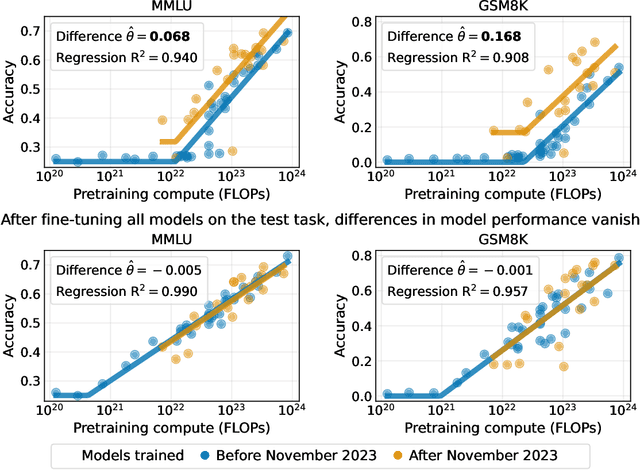
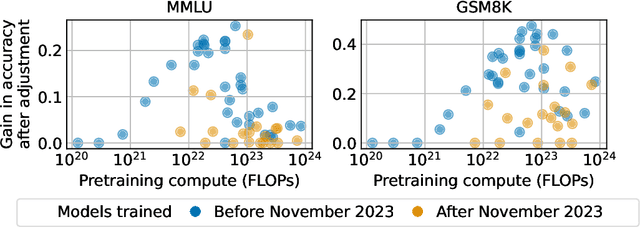


We study a fundamental problem in the evaluation of large language models that we call training on the test task. Unlike wrongful practices like training on the test data, leakage, or data contamination, training on the test task is not a malpractice. Rather, the term describes a growing set of techniques to include task-relevant data in the pretraining stage of a language model. We demonstrate that training on the test task confounds both relative model evaluations and claims about emergent capabilities. We argue that the seeming superiority of one model family over another may be explained by a different degree of training on the test task. To this end, we propose an effective method to adjust for training on the test task by fine-tuning each model under comparison on the same task-relevant data before evaluation. We then show that instances of emergent behavior largely vanish once we adjust for training on the test task. This also applies to reported instances of emergent behavior that cannot be explained by the choice of evaluation metric. Our work promotes a new perspective on the evaluation of large language models with broad implications for benchmarking and the study of emergent capabilities.
Allocation Requires Prediction Only if Inequality Is Low
Jun 19, 2024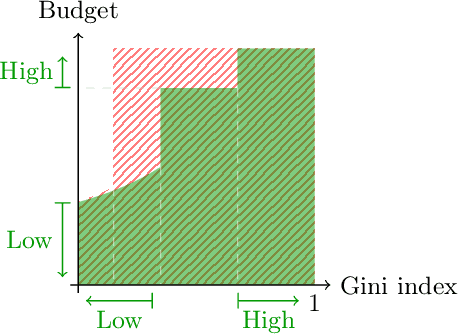
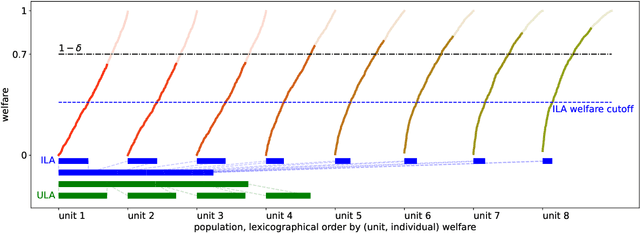

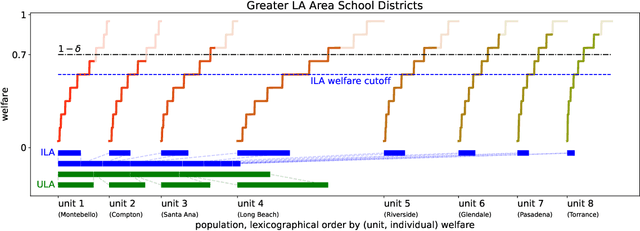
Algorithmic predictions are emerging as a promising solution concept for efficiently allocating societal resources. Fueling their use is an underlying assumption that such systems are necessary to identify individuals for interventions. We propose a principled framework for assessing this assumption: Using a simple mathematical model, we evaluate the efficacy of prediction-based allocations in settings where individuals belong to larger units such as hospitals, neighborhoods, or schools. We find that prediction-based allocations outperform baseline methods using aggregate unit-level statistics only when between-unit inequality is low and the intervention budget is high. Our results hold for a wide range of settings for the price of prediction, treatment effect heterogeneity, and unit-level statistics' learnability. Combined, we highlight the potential limits to improving the efficacy of interventions through prediction.